
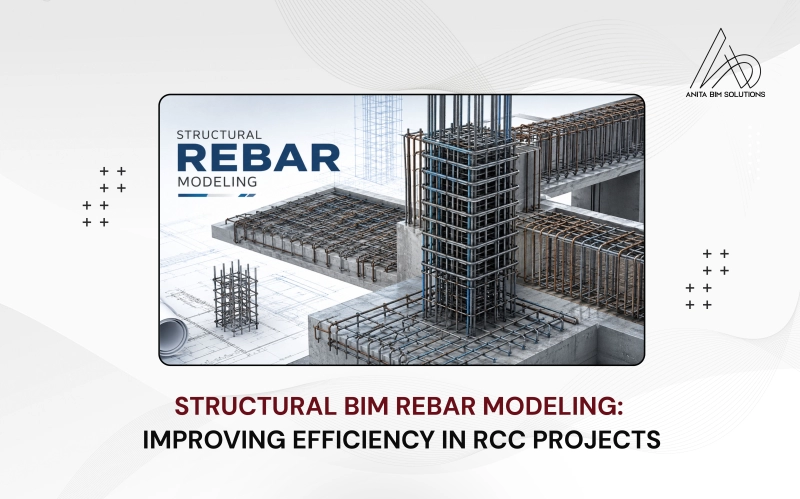
In modern construction, Reinforced Cement Concrete (RCC) structures demand high precision, faster execution, and better coordination between design and site teams. Traditional reinforcement detailing methods often lead to drawing errors, material wastage, and communication gaps during construction. This is where Structural BIM Rebar Modeling becomes a game-changer in RCC projects.
Structural BIM Rebar Modeling enables engineers and construction professionals to create intelligent 3D reinforcement models that improve project accuracy, streamline workflows, and reduce costly site issues. As the construction industry rapidly adopts Building Information Modeling (BIM), rebar modeling has become an essential part of structural project delivery.
Structural BIM Rebar Modeling is the process of digitally modeling reinforcement bars within structural elements such as beams, columns, slabs, footings, shear walls, and staircases using BIM software like Revit and Tekla Structures.
Unlike traditional 2D reinforcement drawings, BIM-based rebar models provide:
This intelligent modeling approach helps engineers understand reinforcement placement clearly before actual construction begins.
RCC structures heavily depend on proper reinforcement placement for strength and durability. Even minor detailing mistakes can create serious construction and safety issues. Structural BIM Rebar Modeling helps eliminate these risks by providing precise reinforcement information throughout the project lifecycle.
BIM-based rebar models reduce manual drafting errors by automating reinforcement placement and detailing. Engineers can generate highly accurate reinforcement layouts and schedules directly from the model.
3D reinforcement visualization helps site engineers, contractors, and fabricators clearly understand complex reinforcement arrangements. This minimizes confusion during execution.
Faster Project Delivery
Automated rebar detailing and quantity extraction significantly reduce drafting time compared to conventional methods. Faster detailing leads to quicker approvals and construction progress.
Structural reinforcement often clashes with MEP services or embedded components in RCC projects. BIM software detects these clashes early, helping teams resolve issues before construction starts.
Precise quantity take-offs generated from BIM models help optimize material usage and reduce unnecessary steel wastage.
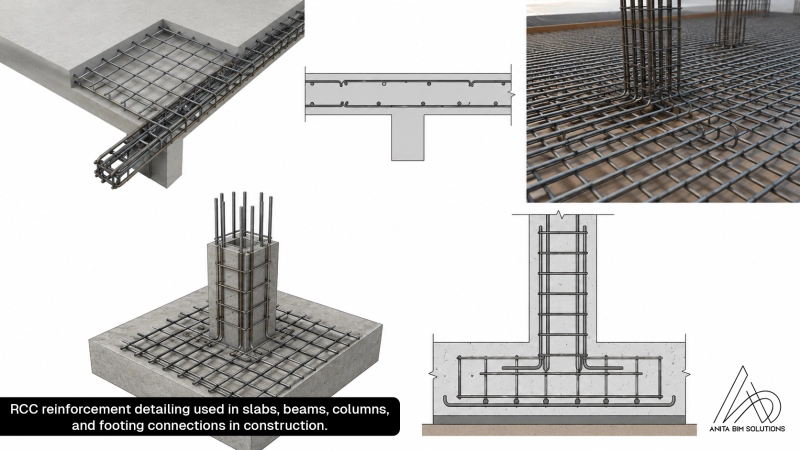
Rebar modeling improves coordination between design, fabrication, and construction teams. Clear reinforcement data enables smoother site execution and reduces delays.
BIM software automatically generates detailed Bar Bending Schedules with accurate lengths, shapes, quantities, and weights of reinforcement bars.
This improves:
Structural BIM models integrate with architectural and MEP models, creating a coordinated project environment. This helps avoid reinforcement conflicts with ducts, pipes, openings, and embedded systems.
3D reinforcement models help identify congestion areas, improper spacing, and constructability issues before execution, ensuring higher construction quality.
Reduced rework, minimized material wastage, and improved planning collectively help lower overall project costs.
Structural BIM Rebar Modeling is widely used in:
Complex projects with dense reinforcement particularly benefit from BIM-based rebar detailing.
Several BIM software platforms support advanced rebar modeling and detailing:
Among these, Revit and Tekla Structures are widely preferred in the BIM industry for structural detailing and reinforcement workflows.
As construction projects become more complex and technology-driven, the demand for skilled Structural BIM professionals is rapidly increasing. Many companies now require BIM-based reinforcement detailing for better project coordination and execution.
Advanced technologies such as automation, AI-assisted detailing, and digital fabrication are further transforming rebar modeling workflows. Structural engineers with BIM and rebar modeling expertise are gaining significant career opportunities in the global construction industry.
Structural BIM Rebar Modeling has become an essential process in improving the efficiency, accuracy, and coordination of RCC construction projects. By replacing traditional 2D detailing methods with intelligent 3D reinforcement models, construction teams can reduce errors, optimize material usage, improve productivity, and deliver projects more efficiently.
As BIM adoption continues to grow across the global construction industry, the demand for skilled professionals in structural BIM and rebar detailing is increasing rapidly. Learning advanced rebar modeling workflows using tools like Revit and Tekla Structures has become highly valuable for civil and structural engineering professionals aiming to build a future-ready career in BIM.
At Anita BIM Solutions, we focus on practical, industry-oriented BIM training that helps students understand real-time structural workflows used in modern RCC projects. Through hands-on project experience, live modeling practices, and expert guidance, students gain the confidence and technical skills required to work on real Structural BIM and Rebar Modeling projects efficiently.
Recognized by many learners as one of the best BIM online courses in Kochi, our training programs are designed to bridge the gap between academic learning and actual industry requirements, helping students build strong career opportunities in the growing BIM industry.